Source jeep car exhaust pipe hanger for Jeep Cherokee, Wrangler, and Grand Cherokee
Compare 30 listings for the jeep car exhaust pipe hanger with varying MOQs and delivery times. Buyers can evaluate options for Jeep Cherokee models from 2014 to 2020, including steel and rubber materials.
Key considerations
Products List


Comprehensive Sourcing Guide
Strategic Sourcing Guide for Jeep Car Exhaust Pipe Hangers
Understanding Component Variability and Technical Specifications
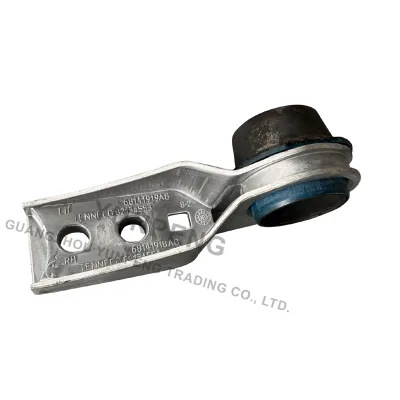
When sourcing a car exhaust pipe hanger insulator specifically for Jeep vehicles, buyers must first navigate the significant variance in product attributes found across global marketplaces. The core keyword "jeep car exhaust pipe hanger" often masks a wide spectrum of component types, ranging from simple rubber insulators to complex metal brackets and flexible pipe assemblies. Based on observed market data, a single listing might describe a component with a model number such as 68141918AB, while another might simply be labeled as a "hook bracket" or "exhaust pipe bracket hook." This inconsistency necessitates a rigorous approach to defining technical specifications before engaging with suppliers.
The physical construction of these hangers varies considerably. Some listings identify the body material as steel, while others specify rubber as the primary component, and some even list stainless steel grades like 201 or 304. This variation is critical because the material choice dictates the component's ability to dampen vibration and resist corrosion. For a Jeep Cherokee 2014-2020, the fitment requirements are specific, yet the market also offers components described as suitable for "All Brands," including Toyota, BMW, and Mercedes-Benz. Buyers must verify that the "Car Fitment" attribute explicitly matches their vehicle's chassis generation, as a generic "Exhaust System" part may not align with the precise mounting points of a Jeep model.
Furthermore, the functional classification of the part is often ambiguous in product descriptions. While the primary function is to support the exhaust pipe, some listings conflate this with sealing applications, mentioning functions like "Fixed Sealing," "Hole Sealing," or "Rotary Sealing." A true exhaust hanger insulator is designed to isolate the exhaust system from the chassis to prevent noise transmission, rather than to seal fluids or gases. Buyers should scrutinize the "Type" attribute to ensure it aligns with "Muffler Clamp" or "Silencer Support Hanger" rather than generic sealants. The thickness of the component is another variable often listed as "other," requiring direct inquiry to confirm if the dimensions meet the load-bearing requirements of the specific exhaust system weight.
Compliance Verification and Certification Standards
Navigating the compliance landscape for automotive exhaust components requires careful attention to the certifications and standards cited in supplier documentation. The market data indicates a prevalence of "ISOTS" certifications, often listed with specific component references such as "Component: Exhaust Tail Pipe" or "Component: Exhaust Pipe." It is vital for buyers to understand that "ISOTS" typically refers to IATF 16949, the international standard for quality management in the automotive industry, though the exact phrasing in listings may vary. Buyers must verify that the supplier holds a valid certificate that covers the specific manufacturing process for exhaust hangers, rather than a generic quality assurance statement.
In addition to quality management systems, discharge standards are a critical compliance factor. Some product listings reference "Euro III" as the discharge standard. While this standard is more commonly associated with emission regulations for the exhaust gas itself, its presence in a hanger listing may indicate the supplier's adherence to broader environmental manufacturing protocols or the component's role in maintaining emission system integrity. However, buyers should not assume that a hanger with an "Euro III" label automatically meets the emission standards of their target market, such as the United States or specific European regions. The "Main Market" attribute often clarifies the intended regulatory environment, with "North America" being a frequent designation for Jeep-specific parts.
Another layer of compliance involves the origin of the product. Listings show a dichotomy where the "Place of Origin" is listed as "United States" in some contexts, while others specify "China," "Fujian, China," or "Zhejiang, China." This distinction is crucial for trade compliance, tariff calculations, and supply chain transparency. A product claiming to be of US origin but manufactured in China requires clear documentation to avoid mislabeling issues. Buyers must request proof of origin that aligns with the "Place of Origin" attribute to ensure the goods meet the country-of-origin requirements for their specific import regulations.
Cost Drivers and Pricing Structure Analysis
The pricing structure for Jeep exhaust pipe hangers is influenced by a complex interplay of material costs, customization requirements, and order volumes. The observed price range in the market spans from $0.01 to $10.20 USD, a wide disparity that reflects differences in material quality, manufacturing complexity, and the level of customization involved. A low-cost item at the lower end of this spectrum is likely a standard, non-customized rubber or steel component with minimal processing. In contrast, items priced closer to the upper limit may involve stainless steel construction, specific molding for the Jeep Cherokee 2014-2020, or custom packaging solutions.
The Minimum Order Quantity (MOQ) is a significant factor in the total cost of procurement. The market data reveals an MOQ range from 1 piece to 10,000 pieces. For buyers seeking to test a new supplier or fulfill a small repair shop order, an MOQ of 1 piece offers flexibility but often comes with a higher unit price. Conversely, bulk purchasers can leverage the lower end of the price spectrum by committing to larger volumes, potentially up to 10,000 pieces. However, buyers must be cautious of suppliers who offer extremely low MOQs without clear justification, as this may indicate a lack of manufacturing capacity or a reliance on trading rather than direct production.
Customization is another major cost driver. Listings frequently note that "Customization: Available" and "Service: Customized OEM" are offered. While this allows buyers to tailor the hanger to specific Jeep models or chassis requirements, it inevitably increases the unit cost and extends the lead time. The "prod_standard" attribute often states "Customized Size" or "as requested," which implies that the tooling or molding process must be adjusted for each order. Buyers should factor in the cost of developing custom molds or dies if they require a unique design, as this is a one-time expense that significantly impacts the initial procurement budget.
Typical Applications and Functional Performance
The primary application of a car exhaust pipe hanger insulator is to support the weight of the exhaust system while isolating vibrations and noise from the vehicle chassis. The market data highlights specific noise sources that these components are designed to mitigate, including "The Noise of Engine," "Aerodynamic Noise," and "Automobile Chassis Noise." For a Jeep Cherokee, the hanger must effectively handle the mechanical noise generated by the engine and the aerodynamic noise created by exhaust gas flow. The "Quality" attribute is often described as "High Quaity" (noting the typo in source data), but buyers should verify this through performance testing rather than relying on marketing claims.
The functional capabilities of these hangers extend beyond simple support. Some listings describe the component as having sealing functions, such as "Dust Prevention Sealing" or "Shaft Sealing." While this may be relevant for specific sealing applications within the exhaust system, it is essential to distinguish between a true hanger and a seal. A hanger's primary role is structural support and vibration damping. If a supplier markets a hanger with extensive sealing properties, buyers should confirm that these features do not compromise the flexibility required for the exhaust system to expand and contract under thermal stress.
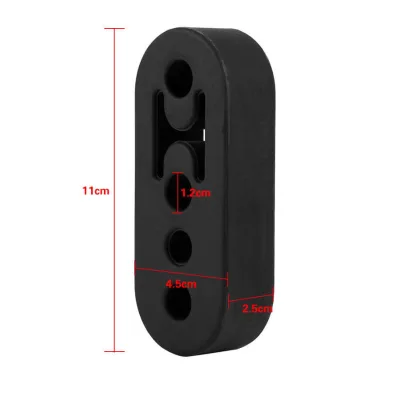
The "Hole Diameter" is a critical specification for installation, with some listings specifying a 12mm diameter. This dimension must match the bolt or stud size on the Jeep chassis to ensure a secure fit. Additionally, the "Application" attribute may list various sealing types, such as "Auxiliary Seal" or "Flange Seal," which suggests the component might be part of a larger assembly. Buyers should ensure that the hanger they select is compatible with the specific mounting hardware of their Jeep model, as a mismatch in hole diameter or bracket shape can lead to installation failures or premature wear.
Supplier Evaluation and Manufacturing Capabilities
Evaluating suppliers for Jeep exhaust pipe hangers requires a deep dive into their manufacturing capabilities and supply chain transparency. The market data shows suppliers originating from various locations, including "Zhejiang Yueqing" and "Fujian, China," as well as claims of "United States" origin. Buyers should prioritize suppliers who can provide verifiable evidence of their manufacturing location and capacity. A supplier claiming "United States" origin but listing a Chinese address may be a trading company rather than a manufacturer, which can impact quality control and lead times.
The "Lead Time" is another critical evaluation metric. Observed delivery times range from 3 to 15 days, which is relatively short for custom automotive parts. However, buyers must verify if this lead time applies to stock items or custom orders. Customized parts, especially those requiring specific molds or sizes, often require longer production cycles. The "Selling Units" attribute indicates that some suppliers offer single-item sales, which is beneficial for small orders but may not reflect the efficiency of their bulk production lines.
Certification status is a key differentiator in supplier evaluation. The presence of "ISOTS" certifications suggests adherence to automotive quality standards, but buyers should request the actual certificate to confirm its validity and scope. Additionally, the "Market" attribute, which lists "OEM, After Market," indicates the supplier's experience in both original equipment and replacement parts. Suppliers with OEM experience are generally better equipped to meet the stringent quality requirements of Jeep manufacturers, while those focused on the after-market may offer more flexibility in customization.
Quality Control and Long-Term Procurement Considerations
Ensuring long-term quality in exhaust pipe hanger procurement involves establishing robust quality control protocols. The "Warranty" attribute, often listed as "5 MONTHS," provides a baseline for buyer protection, but buyers should negotiate longer warranty periods for bulk orders to mitigate the risk of premature failure. The "Material" attribute, which includes options like "Steel," "Rubber," and "201,304" stainless steel, must be verified through material test reports to ensure the components can withstand the harsh conditions of the exhaust system, including high temperatures and corrosive gases.
Packaging is another aspect of quality control that impacts the longevity of the product during transit. Listings mention "Carton," "Plastic Bag+Carton," and "Neutral Pack" as packaging options. For international shipping, especially from China to North America, robust packaging is essential to prevent damage. Buyers should specify packaging requirements that protect the hangers from moisture and physical impact, particularly if the components are made of rubber or coated steel.
Long-term procurement considerations also include the scalability of the supplier. As a buyer's demand grows, the supplier must be able to increase production without compromising quality. The "Customization: Available" attribute suggests flexibility, but buyers should assess the supplier's ability to handle volume increases. Additionally, the "Main Market" being "North America" indicates that the supplier is familiar with the regulatory and quality expectations of that region, which is beneficial for maintaining consistency in future orders.
Comparative Analysis of Component Attributes
To facilitate informed decision-making, the following table summarizes the key attributes observed in the market for Jeep exhaust pipe hangers. This comparison highlights the variability in specifications and helps buyers identify the critical factors for their specific needs.
| Attribute Category | Observed Variations | Critical Verification Point |
|---|---|---|
| Material | Steel, Rubber, 201/304 Stainless Steel | Verify material grade for corrosion resistance and durability. |
| Fitment | Jeep Cherokee 2014-2020, All Brands | Confirm exact model year and chassis compatibility. |
| Certification | ISOTS (Exhaust Tail Pipe/Pipe) | Request valid IATF 16949 certificate covering the specific part. |
| Origin | United States, Fujian (China), Zhejiang (China) | Verify country of origin for tariff and compliance purposes. |
| MOQ | 1 PCS to 10,000 PCS | Align order volume with supplier capacity and pricing tiers. |
| Lead Time | 3~15 Days | Confirm if lead time includes customization or is for stock items. |
| Function | Hanger, Seal, Clamp, Bracket | Distinguish between structural support and sealing functions. |
| Warranty | 5 Months | Negotiate warranty terms based on order volume and application. |
By carefully analyzing these attributes and cross-referencing them with the specific requirements of the Jeep vehicle, buyers can mitigate the risks associated with the diverse and sometimes ambiguous product listings found in the global market. The key to successful procurement lies in rigorous verification of specifications, certifications, and supplier capabilities, ensuring that the final component meets the high standards required for automotive exhaust systems.
FAQs
What is the warranty period for this exhaust hanger?
The warranty period is 5 months for this specific car exhaust pipe hanger insulator. This coverage applies to defects in material and workmanship under normal usage conditions for Jeep vehicles.
Which Jeep models does this part fit?
This part is specifically designed for the Jeep Cherokee models from 2014 to 2020. Buyers must verify their vehicle chassis generation to ensure the mounting points align with the provided specifications.
How long does delivery take for this item?
Delivery time ranges from 3 to 15 days for this product. This lead time applies to standard orders and may vary depending on the specific customization requirements or current stock availability.
Can I order a single unit of this hanger?
Yes, you can order a single item as the selling unit is listed as a single piece. The minimum order quantity starts at 1 piece, allowing for small batch testing or immediate repair needs.
What material is used for the body of this hanger?
The body material is specified as steel, while other components may be made of rubber or stainless steel grades like 201 and 304. The exact composition depends on the specific model variant selected for the order.
Is customization available for this exhaust pipe bracket?
Customization is available for this product, including customized sizes and specific model requirements. Buyers should request details on lead times and costs associated with modifying the standard specifications.